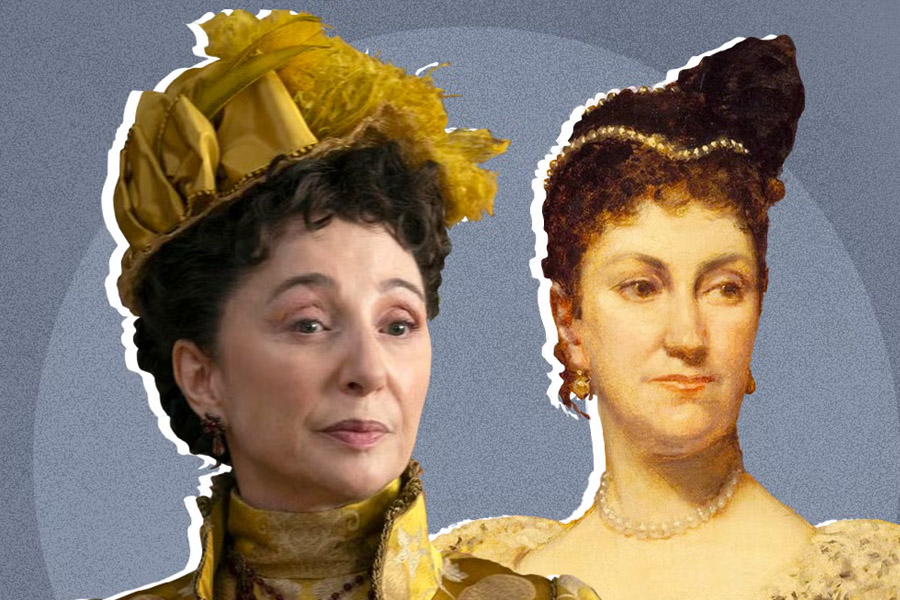
Caroline Astor Drayton Phillips experienced two Americas. She was born during New York’s Gilded Age, when family names opened doors, social calls were scheduled, and dinner table positions had political weight. After marrying ambassador William Phillips, she entered the changing world of 20th-century international affairs. Her existence linked the ballroom, embassy, Astor drawing room, and heated European diplomacy.
In Manhattan, Caroline was born October 26, 1880. Mother Charlotte Augusta Astor was the daughter of Mrs. Caroline Schermerhorn Astor and William Backhouse Astor Jr. Her father, lawyer James Coleman Drayton, came from a New York and South Carolina family.
Early on, Caroline was connected to powerful families. But privilege didn’t make her childhood peaceful. The 1890s divorce of her parents was a national scandal. The separation affair garnered international interest and a rumoured duel challenge that never occurred. Public interest surrounded Caroline and her siblings. She lived with her father in New Jersey, New York, and England after the divorce.
Private tutors taught Caroline. Her lessons were formed by aristocratic young woman expectations, yet her later diaries show a mind beyond social decorum. Religion, art, politics, history, travel, and people around her were her topics. She may have made intimate, acute, introspective, or stern observations.
The Astor and Drayton Family Connection
Caroline’s family tree brought together some of the most recognizable names in American society. The Astors represented immense wealth and social authority, while the Draytons carried their own history, particularly through their connections to South Carolina and Drayton Hall.
| Family member | Relationship to Caroline | Place in her story |
|---|---|---|
| William Backhouse Astor Jr. | Maternal grandfather | Astor heir and husband of Mrs. Astor |
| Caroline Schermerhorn Astor | Maternal grandmother | New York society leader known as Mrs. Astor |
| Henry Edward Drayton | Paternal grandfather | Member of the Drayton family |
| Sarah Hand Coleman | Paternal grandmother | Part of Caroline’s Drayton and Coleman heritage |
| Charlotte Augusta Astor | Mother | Later married George Ogilvy Haig |
| J. Coleman Drayton | Father | Lawyer and Caroline’s custodial parent after the divorce |
| John Jacob Astor IV | Maternal uncle | Financier, inventor, and Titanic victim |
| Helen Astor | Maternal aunt | Later connected to the Roosevelt family |
| Emily Astor | Maternal aunt | Married into the Van Alen family |
Caroline’s grandmother, Mrs. Astor, was a prominent New York society figure. Her four hundred names defined aristocratic society. Being welcomed into that circle was social citizenship. Caroline inherited that world’s name, etiquette, and connections, but she lived long enough to witness its norms shift drastically.
On April 15, 1912, the Titanic sank, killing her uncle John Jacob Astor IV. One of the greatest tragedies of modern times became personal after the accident. Caroline’s journals also recreated an era when family news could go from a house to the front pages of newspapers overnight.
Caroline had several siblings, including Henry Coleman Drayton, William Astor Drayton, and Alida Livingston Drayton. Accounts of the family sometimes differ regarding the full number of children, but the siblings shared the complicated legacy of the Drayton and Astor names.
Marriage to William Phillips
Caroline married famed Boston diplomat William Phillips in 1910. The marriage united two American dynasties, but it was more than social. William needed flexibility and public presentation in his job. Caroline joined him in that hectic life.
The couple had six children, although one died in infancy. Their children were Miriam Drayton Phillips, Beatrice Schermerhorn Phillips, William Phillips Jr., Drayton Phillips, Christopher Hallowell Phillips, and Anne Caroline Phillips.
Born in 1912, Miriam died 1913. Caroline recorded her short existence as a private sorrow against public life. Rear Admiral Elliott Bowman Strauss married Beatrice. William Jr. married Barbara Holbrook, while Drayton married Evelyn Gardiner. State senator Christopher Hallowell Phillips worked in public service and diplomacy. John Winslow Bryant married Anne Caroline.
The family spent most of its time in Washington, European capitals, and Highover, their North Beverly, Massachusetts mansion. Amid diplomatic activity, Highover offered stability. Family reunions, correspondence, healing, and American domestic customs with international responsibilities took place there.
A Diplomatic Hostess and Observer
Diplomacy relied on Caroline, who was not a government official. She hosted diplomats, aristocrats, artists, churchmen, and dignitaries. Her job demanded sensitivity and social skills. A supper can be delightful while under pressure from talks.
She attended the coronation of King George V in 1911 and met figures such as Queen Wilhelmina of the Netherlands. Her travels exposed her to royal ceremonies, embassy life, religious institutions, and the increasingly dangerous politics of Europe.
William Phillips served in several important diplomatic posts, including assignments connected with the Netherlands, Belgium, Canada, and Italy. From 1936 to 1940, he was United States ambassador to Italy during Benito Mussolini’s rule. Caroline watched Fascist Italy closely. Her diary entries reflected concern about the country’s political direction, its relationship with Germany, and the possibility that diplomatic efforts might prevent a deeper alliance between Italy and the Axis powers.
During this period, she also encountered the Vatican and recorded an audience with Pope Pius XII in 1940. Her writing often moved between political analysis and spiritual reflection. She could describe a government, a social gathering, or a religious figure with the same attentive eye.
The Phillipses knew Franklin and Eleanor Roosevelt. Family connections brought Caroline near the Roosevelt circle, but familiarity did not alter public life’s formality. She saw the Roosevelts as friends, political leaders, and national crisis characters.
The Diaries of Caroline Astor Drayton
Caroline kept diaries for most of her adult life. Approximately 64 volumes cover the years from about 1897 through 1961. Together, they form a long personal lens through which the twentieth century comes into focus.
The diaries include details about:
- Her youth and the emotional effects of her parents’ divorce
- Social events among wealthy American families
- Her marriage and children
- Life in embassies and diplomatic residences
- The coronation of King George V
- Encounters with European royalty and religious leaders
- Fascist Italy before the Second World War
- Washington society during the Wilson and Roosevelt administrations
- Travel, theater, art, religion, and family routines
- The influenza epidemic, war, and changing international relations
What makes the diaries vivid is the movement between the ordinary and the historic. A description of a child’s illness may appear beside an account of a minister or ambassador. A family dinner may lead into reflections on war. Caroline understood that history was not only made in conference rooms. It also unfolded in nurseries, railway compartments, hotel suites, churches, and dining rooms.
She sometimes wrote with the assumptions of her class and period. Her observations reflect the privileges and limitations of a wealthy woman born in 1880. Even so, the diaries show her developing judgment as the old social order gave way to a more uncertain modern world.
Caroline also survived typhoid fever as a young woman. A family story has associated her illness with Mary Mallon, known as Typhoid Mary, though the exact connection remains uncertain. The episode became one of the lesser known details in a life already crowded with unusual encounters.
Later Years and Death
After the Second World War, Caroline continued to divide her time between family life, travel, and Highover. William Phillips remained involved in public affairs and later wrote about his diplomatic career. Their marriage lasted 55 years, from 1910 until Caroline’s death.
Caroline died on January 7, 1965, at the age of 84 while staying at Boston’s Hotel Vendome. She was buried in North Beverly Cemetery in Massachusetts, close to the region that had become her family’s home.
Her descendants continued the Astor, Drayton, and Phillips ties. Some went into diplomacy, public service, the military, or New England and New York culture. They kept Caroline’s family connected to the institutions and circles that influenced her existence.
FAQ
Who was Caroline Astor Drayton?
Caroline Astor Drayton, later Caroline Astor Drayton Phillips, was an American socialite, diarist, and diplomatic hostess. She was born into the Astor and Drayton families and married diplomat William Phillips in 1910.
Who were Caroline’s parents?
Her parents were J. Coleman Drayton and Charlotte Augusta Astor. Their divorce during the 1890s became a widely publicized scandal. Charlotte later married George Ogilvy Haig.
Who was Caroline Astor’s famous grandmother?
Her maternal grandmother was Caroline Schermerhorn Astor, widely known as Mrs. Astor. She was one of the leading figures in New York society during the Gilded Age.
How many children did Caroline and William Phillips have?
They had six children. Their daughter Miriam died in infancy, while Beatrice, William Jr., Drayton, Christopher, and Anne Caroline survived into adulthood.
What did William Phillips do?
William Phillips was a career diplomat who served as ambassador to Italy and held senior diplomatic and State Department positions. He also worked in important government roles during periods of war and international crisis.
Where are Caroline Astor Drayton’s diaries?
Her diaries are preserved in the Caroline Astor Drayton Phillips papers at the Schlesinger Library in Cambridge, Massachusetts. The collection includes approximately 64 diary volumes along with personal papers, photographs, correspondence, programs, and other materials.
What subjects appear in the diaries?
The diaries cover family life, elite society, diplomacy, politics, religion, art, travel, European affairs, the Roosevelts, Fascist Italy, and the emotional demands of motherhood and public life.
Was Caroline related to John Jacob Astor IV?
Yes. John Jacob Astor IV was her maternal uncle. He died aboard the Titanic in 1912.
Was Caroline related to Franklin Roosevelt?
Caroline had family connections to the Roosevelt circle through her aunt Helen Astor, who married into the Roosevelt family. Caroline and William Phillips also maintained a close friendship with Franklin and Eleanor Roosevelt.